

In total we had 52 attending the CRR 2024 School Holiday Programme over the four days in July 2024.
We hope that all the children who attended have happy memories of the time they spent with us in the CRR and have taken away with them a deeper understanding of the natural world, and the importance of caring for it. It was an absolute privilege to have each and every one of them here, and we hope we get the opportunity to see them again at another one of our School Programme initiatives. It would be impossible to
convey to those reading this post everything the children experienced and did, so please take the time to look through the diary of photos. A picture can truly speak a thousand words.

School Holiday Programme 2024 Photo Gallery
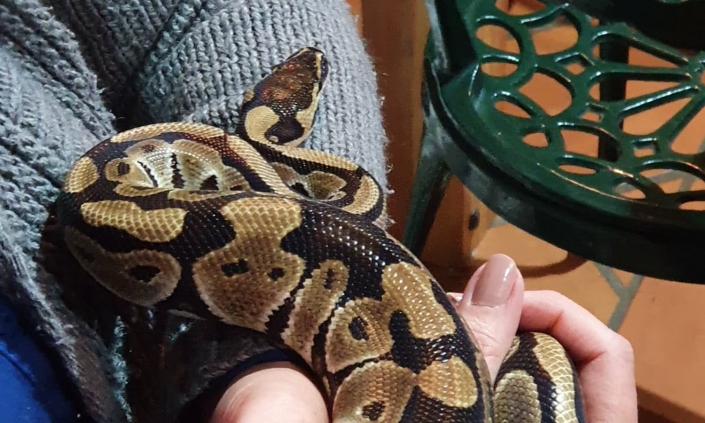
A Talk By the Jhb Wildlife Vet at the Reserve
Over 40 people attended the Urban Wildlife talk by the Johannesburg Wildlife Veterinary Hospital and Rehabilitation Facility. This event was held on Sunday the 18th April 2021. Everyone involved deemed it an absolute hit. It was wonderful to see the number of children in the audience who participated with great enthusiasm!
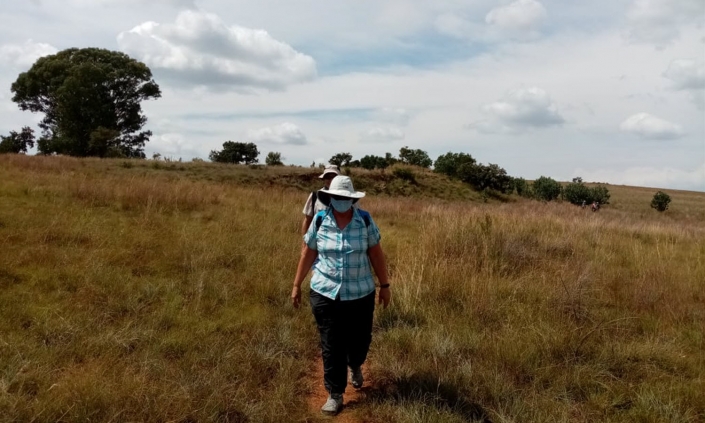
A Successful Tree Walk in March 2021
The Tree Walk held in the Crocodile River Reserve offered an insightful and easy to understand introduction to the day, starting with the structure of leaves and how to use this to identify a tree. What followed was a walk through the beautiful veld of the Reserve during which we identified a variety of trees - such as the fascinating underground tree Lannae Aedulis, the Diospyros Lycioides (Blue Bush), the common but beautiful Acacia Karroo (Sweet Thorn) and the Protea Caffra Trees but to name a few.

Large Sourplum
The ripe fruits of the Ximenia Caffra or Sourplum are eaten by birds such as barbets, bulbuls and starlings and mammals such as giraffe, impala, kudu, grey duiker, steenbok, bushbuck and eland enjoy eating it's leaves. The larvae of a number of butterflies feed on the leaves, some examples being the Bush Scarlet butterfly, Natal and Silvery bar, Bowker's and Saffron sapphire and the Brown playboy.

Lannea Edulis
Lannea edulis has shiny green leaves that are hairy when young and leathery when matured, with creamy white flowers from August to October. It bears bright red ovoid berries from October to December that become purplish black when they become ripe, which have a juicy and pleasantly sour flavour and are eaten by mice, birds and humans.

Buffalo Thorn Tree
The Buffalo Thorn Tree is widely used for magical and medicinal purposes because of the spines or thorns, which are paired; One is hooked, and the other is straight. According to Nguni legend, the thorns of the Ziziphus tell us something about ourselves - that we must look ahead to the future (straight thorns) but we must never forget where we have come from (hooked thorns).
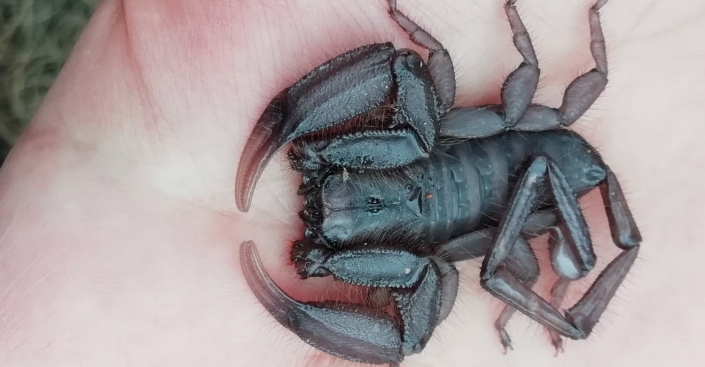
Our first post-lockdown scorpion walk
After months in lock-down, it was a joy to get back outdoors and into nature, as our creepy crawly expert, Jonathan Leeming, shared fascinating facts about why all arachnids should be treated with respect rather than fear.
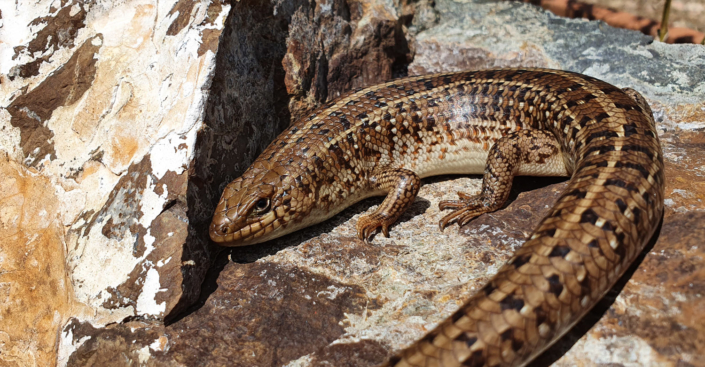
Cape Skink
The Cape skink is live-bearing and the female may take up to a week to birth her litter of offspring - often between 8 and 18 per brood. Each baby is born in a thin, membranous bag or 'shell' that it breaks out of within seconds. Newborns measure measure 5 to 7 cm.
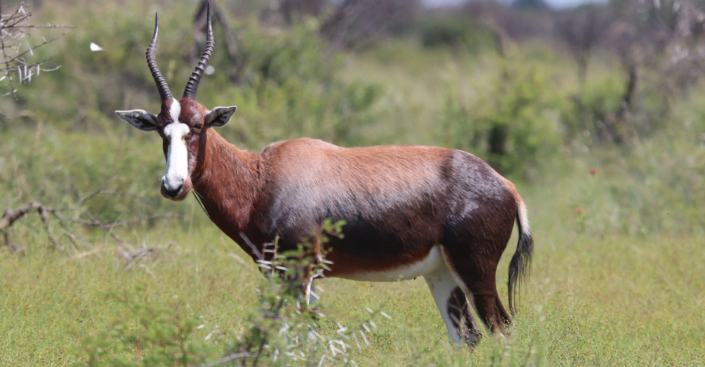
Blesbuck
The blesbok or blesbuck has a distinctive white face and forehead which inspired the name, because bles is the Afrikaans word for a blaze such as one might see on the forehead of a horse.
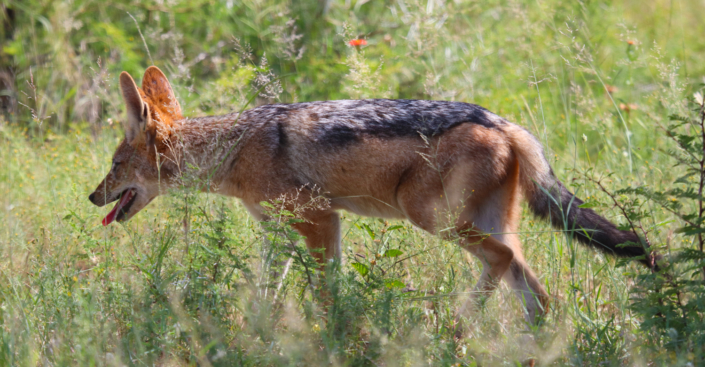
Black-Backed Jackal
The Black-Backed Jackal is a wonderfully resourceful scavenger and cleans up all the offal and remains of dead animals when not dining on scrub hares, mongoose, mice, rats, lizards and snakes.
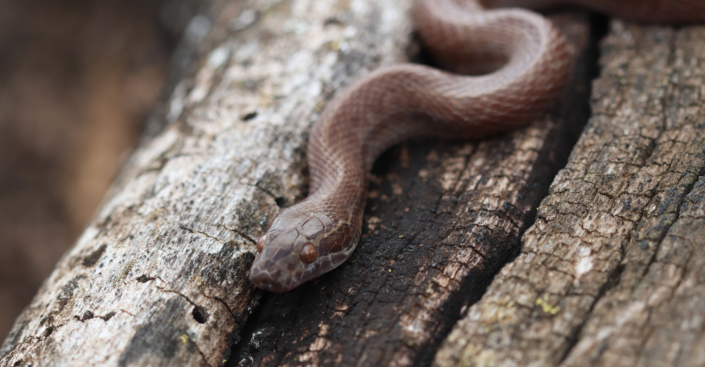
Brown House Snake
The Brown House Snake, is one of the most common and most useful snakes in South Africa. It is attracted to human dwellings where it feeds on rats, mice and lizards. They are not venomous and are completely harmless to humans. House snakes are powerful constrictors which rely on their muscle power to constrict prey.
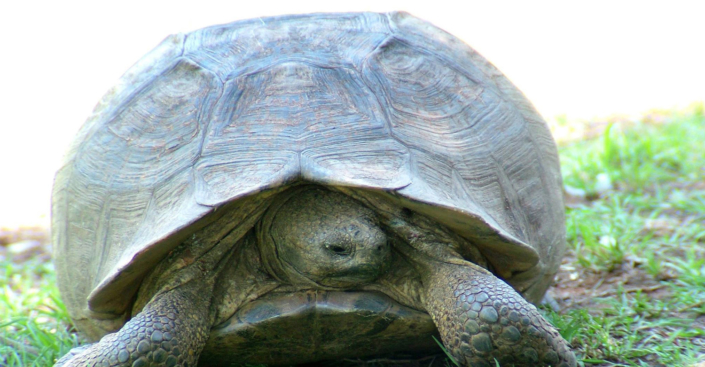
Handling Tortoises
Tortoises store water in a cloacal bursa or sack in the rear of the body for use when required. They will also excrete this water supply as a defence against predators [or humans!] and to dampen dry soil when digging holes in which to lay eggs. If you pick up a tortoise trying to survive in very dry conditions it may excrete its valuable water supply, resulting in the eventual death of the animal.
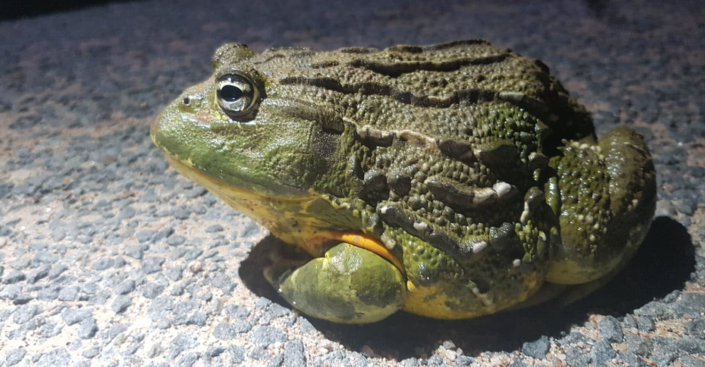
Giant Bullfrog
The Giant African Bullfrog is among the largest frogs, with males weighing up to 1.4 kg. It is an insatiable carnivore, eating insects, small rodents, reptiles, small birds, and other amphibians.

Crinum Bulbispernum
The Crinum lily is a large bulbous plant up to 1m high, which produces attractive grey green gracefully arching leaves during the summer months, and is often seen in the Crocodile River Reserve.

Pachycarpus Schinzianus
Pachycarpus schinzianus is also known as Creamcup or Bitterwortel, and is a rough-textured, erect perennial which grows between 0.3 and 0.6 m tall. Every spring it resprouts from an underground rootstock.
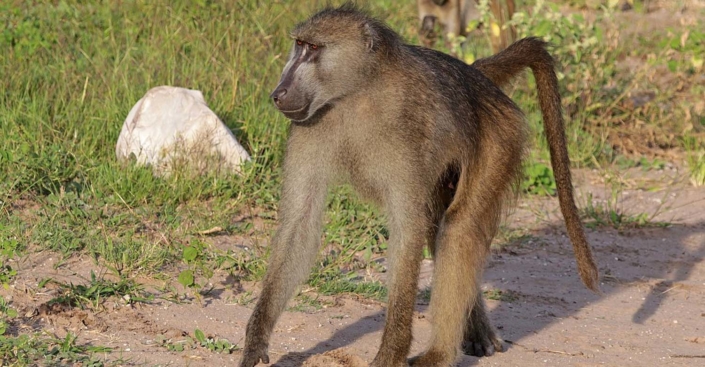
Chacma Baboon
Baboons are omnivorous with the bulk of their diet including fruit, seeds, insects, bulbs and any small poor helpless bird or mammal that they can catch.

Black-Collared Barbet
The Black-Collared Barbet or Lybius Torquatus is also known as the Rooikophoutkapper and is one of the most common barbets in Africa, occurring from the DRC to Kenya and southern Africa.

Black-Crowned Tchagra
This bird of the Crocodile River Reserve tends to favour the northern mountain bushveld. The black forehead and crown differentiate this Tchagra from other Tchagras. It is also a larger, bolder bird and is more conspicuous in its behaviour.

Barn Owl
The Barn Owl has earned itself the nickname ‘ghost owl’ because of its pale plumage and chilling call. This creature is one of the most widely distributed bird species in the world, and the superstition surrounding it has been unwittingly passed down from generation to generation. These superstitions have led to the senseless and cruel killing of these birds over the decades, however, farmers and enlightened city-folk hold these splendid birds in high regard, because they protect crops by feeding on rats, mice and birds.
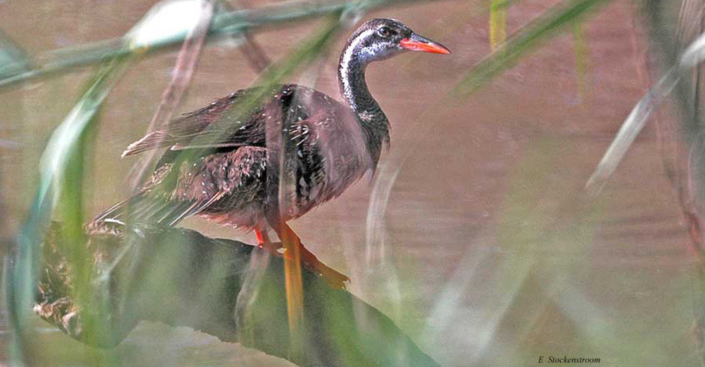
African Finfoot
The African Finfoot or Watertrapper, (Podica senegalensis) is a very rare and vulnerable bird species. The Afrikaans name for the African Finfoot is "Watertrapper".
The African Finfoot is about the size and shape of a large cormorant.
The African Finfoot is about the size and shape of a large cormorant.

Themeda Triandra Grass
One of the species regarded as the most valuable grass in sourveld is Themeda triandra. Also known as Red Grass, it grows abundantly when the veld is in good condition.

Identification of Grasses
Some grasses have stems which grow along the surface of the ground, and result in new shoots. These horizontal stems are called STOLONS. If the horizontal stems are below the ground, they are called RHIZOMES.

Bristle-Leaved Red Top Grass
It is easy to confuse the Bristle Leaved Red Top grass with the Natal Red Top if not for one thing: the Natal Red Top grows in disturbed soil (a pioneer), while the Bristle-leaved red top is an indicator of undisturbed veld.
