• Crocodile River Reserve

    School Programme

CRR Environmental Education School Programme

“If we want children to flourish, to become truly empowered, let us allow them to love the earth before we ask them to save it”

-David Sobel
The Wild Crew

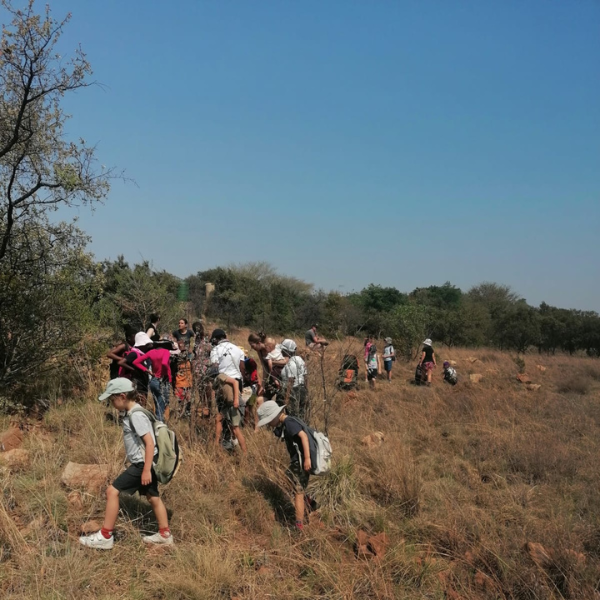
Every month, young explorers join the Wild Crew for hands-on adventures in nature!

These events are designed to spark curiosity, build environmental awareness, and connect children with the wonders of the natural world—one fun, interactive outing at a time.

From wetlands and wildlife to geology and culture, there’s something new to discover each month in the Crocodile River Reserve.

Each session is led by qualified environmental educators and passionate volunteers who guide and inspire the children through age-appropriate, curriculum-linked activities.
The Crocodile River Reserve (CRR)

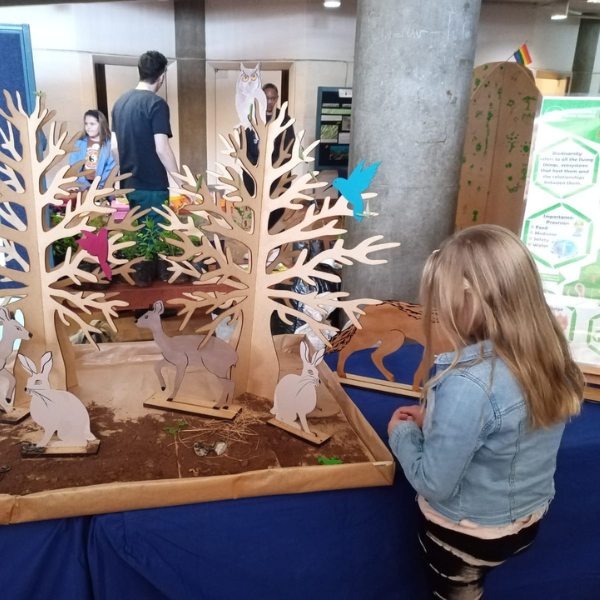
The Crocodile River Reserve is an important natural environment that lies in the biodiversity rich grassland biome. It conserves threatened ecosystems; the critically endangered Egoli Granite Grassland.

The CRR was proclaimed and declared a protected area in 2019 under the National Environmental Management: Protected Areas Act 57 of 2003 (NEM: PAA).

The CRR falls within the UNESCO Magaliesberg Biosphere and is a buffer to the Cradle of Humankind World Heritage site.
School Programmes We Offer in the CRR

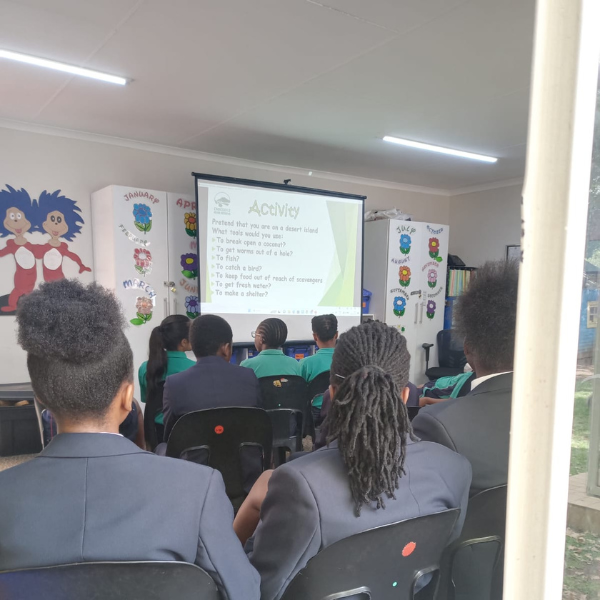
The Primary School Programmes teach children about nature in a fun and interactive way, helping to grow their awareness of all the incredible natural phenomena around them.

The High School Programme encourages the learners to take an interest in nature and teaches them to recognise the vital role the environment plays in the survival of our and all other species through interaction with nature itself. Seeing is believing.

Our in-house and CRR venue school programs also cater for Scouts, Girl Guides, Eco and Nature Clubs, Honorary Rangers and other special groups.

Sponsor the Wild Crew

Inspire a Love for Nature That Lasts a Lifetime

The Crocodile River Reserve School Programme has been reaching children across our communities for years—offering them a chance to connect with nature in a deep and lasting way. In 2025, we’re taking that mission even further with a fresh new identity: The Wild Crew.

Our vision is simple yet powerful:

More children. More access. More impact.

Thanks to generous sponsors, many children who would never have had the opportunity to explore our natural world have been able to attend our events. But the need continues to grow—and with your help, we can reach even more young minds in 2025.

Here’s what’s new:

  • The Wild Crew gives the programme a fun, modern identity that all age groups can connect with.

  • Monthly events will replace the previous quarterly schedule, ensuring regular exposure to nature throughout the year.

  • Separate age groups at events allow educators to tailor content and interaction.

  • New learning tools like microscopes and specimen boxes, generously provided by the GSA, enhance the experience.

  • All sessions are curriculum-based, and every child receives a snack pack and a Wild Crew file to collect event stickers.

  • At year-end, each child earns a certificate of participation—a proud reminder of their journey with nature.

We are also introducing two relaxed school holiday programmes, focused on play and appreciation rather than curriculum—perfect for nurturing a lifelong love of the outdoors.

The cost to sponsor one child is just R90 per event, with a full-year commitment of 10 events (R900 total). We aim to fill a 15-seat taxi each month with children from under-resourced areas and give them a consistent, immersive experience throughout the year.

You can help us do that.

Your support will cover not only the event itself but also transport and resources to make every experience memorable and meaningful.

🌱 Sponsoring a child means giving them a deeper understanding of nature, their place in it, and why it’s worth protecting.

Let’s grow a generation that understands and values the environment—one child, one adventure at a time.

What does the CRR environmental education school programme include?

Field outing in the CRR:

  • Qualified Facilitator/s
  • Conservation Fee
  • Educational Activities, including a nature walk
  • Resources for the activities where applicable

Excludes:

  • Transportation

In-house at a school:

  • Qualified Facilitator/s
  • Conservation Fee
  • Educational Activities
  • Resources for the activities where applicable

Note:

The in-house school programme timetable can be tailored to the needs of the School.

Want to Chat to our Environmental Educationists?

If you would like one of our environmental educationists to contact you, or to make a booking, please email us on schools@crocodileriverreserve.co.za.

Be sure to mention if the School is a Primary or a High School.

Handling Tortoises

Handling Tortoises

Tortoises store water in a cloacal bursa or sack in the rear of the body for use when required. They will also excrete this water supply as a defence against predators [or humans!] and to dampen dry soil when digging holes in which to lay eggs. If you pick up a tortoise trying to survive in very dry conditions it may excrete its valuable water supply, resulting in the eventual death of the animal.
February 9, 2020/by admin
Lannea Edulis

Lannea Edulis

Lannea edulis has shiny green leaves that are hairy when young and leathery when matured, with creamy white flowers from August to October. It bears bright red ovoid berries from October to December that become purplish black when they become ripe, which have a juicy and pleasantly sour flavour and are eaten by mice, birds and humans.
February 23, 2021/by admin
Ball Python has a snuggle

A Talk By the Jhb Wildlife Vet at the Reserve

Over 40 people attended the Urban Wildlife talk by the Johannesburg Wildlife Veterinary Hospital and Rehabilitation Facility. This event was held on Sunday the 18th April 2021. Everyone involved deemed it an absolute hit. It was wonderful to see the number of children in the audience who participated with great enthusiasm!
April 20, 2021/by admin
Bullfrog in Laezonia

Giant Bullfrog

The Giant African Bullfrog is among the largest frogs, with males weighing up to 1.4 kg. It is an insatiable carnivore, eating insects, small rodents, reptiles, small birds, and other amphibians.
February 1, 2020/by admin
Pachycarpus Schinzianus

Pachycarpus Schinzianus

Pachycarpus schinzianus is also known as Creamcup or Bitterwortel, and is a rough-textured, erect perennial which grows between 0.3 and 0.6 m tall. Every spring it resprouts from an underground rootstock.
January 8, 2020/by admin

The Wild Crew – Seeds – September 2025

Looking back on what the CRR School Programme has achieved so far in 2025, and seeing the little veld flowers popping up in the Egoli Granite Grasslands even before the first rains, I am reminded just how important our lessons on seeds have been. This topic may not seem quite as exciting as water, history, or geology, but without seeds—where would we be?
September 4, 2025/by Susan Long

The Wild Crew – Trees & Grass Plant Ecology – September 2025

On our recent Wild Crew outing, we took full advantage of the warm weather and spent almost the entire day outdoors on our nature walk. It took some time to reach our planned destination - a ridge on the Egoli Granite Grasslands - because there was simply so much to see and explain.
September 24, 2025/by Susan Long

The Wild Crew – Birds – Oct 2025

We started by exploring how birds are adapted to what they eat and where they live. From sharp beaks to clever claws, every feathered friend has its own design for survival. Our walk took us through five different habitats, each alive with birdsong and movement.
October 17, 2025/by Susan Long

Birds of the Crocodile River Reserve Talk

Justin guided us through a carefully curated selection from the CRR's impressive bird list — and while covering all 255 recorded species in one morning was never going to be possible, he chose beautifully. The majestic Brown Snake Eagle, the charismatic Arrow-marked Babbler, the humble Dove, the mystical Grass Owl and the very special Orange River Francolin were among the stars of the show. The presentation was, however, occasionally — and hilariously — interrupted by a group of Hadeda Ibis who clearly felt they deserved a mention too.
August 31, 2026/by admin
Brown House Snake

Brown House Snake

The Brown House Snake, is one of the most common and most useful snakes in South Africa. It is attracted to human dwellings where it feeds on rats, mice and lizards. They are not venomous and are completely harmless to humans. House snakes are powerful constrictors which rely on their muscle power to constrict prey.
March 15, 2020/by admin
Crinum Bulbispernum

Crinum Bulbispernum

The Crinum lily is a large bulbous plant up to 1m high, which produces attractive grey green gracefully arching leaves during the summer months, and is often seen in the Crocodile River Reserve.
January 8, 2020/by admin
Blesbuck

Black-Backed Jackal

The Black-Backed Jackal is a wonderfully resourceful scavenger and cleans up all the offal and remains of dead animals when not dining on scrub hares, mongoose, mice, rats, lizards and snakes.
March 15, 2020/by admin

The Wild Crew – Rocks – August 2025

Clearly, rocks do rock, if the number of children and parents who turned up for this event was anything to go by. Everyone enjoyed the walk to Koppie Alleen, and the climb to the top was a real adventure! Understanding the vital role rocks have played in the forming of the planet, and their contribution to the environment in the past and now, gave everyone pause for thought.
August 15, 2025/by Susan Long
Large Sourplum

Large Sourplum

The ripe fruits of the Ximenia Caffra or Sourplum are eaten by birds such as barbets, bulbuls and starlings and mammals such as giraffe, impala, kudu, grey duiker, steenbok, bushbuck and eland enjoy eating it's leaves. The larvae of a number of butterflies feed on the leaves, some examples being the Bush Scarlet butterfly, Natal and Silvery bar, Bowker's and Saffron sapphire and the Brown playboy.
February 24, 2021/by admin

The Wild Crew – Seeds

Although the focus for this outing was seeds—particularly grasses—the rich biodiversity of the grasslands meant we discovered all sorts of interesting things along the way. We came across beautiful flowers, unusual plants, butterflies, grasshoppers, and other fascinating creepy crawlies that demanded our attention.
April 20, 2025/by Susan Long
Black-Collared Barbet by Bernard DUPONT

Black-Collared Barbet

The Black-Collared Barbet or Lybius Torquatus is also known as the Rooikophoutkapper and is one of the most common barbets in Africa, occurring from the DRC to Kenya and southern Africa.
January 7, 2020/by admin
African Finfoot by Eric Stockenstroom

African Finfoot

The African Finfoot or Watertrapper, (Podica senegalensis) is a very rare and vulnerable bird species.  The Afrikaans name for the African Finfoot is "Watertrapper".
The African Finfoot is about the size and shape of a large cormorant. 
January 7, 2020/by admin
css.php