

Our Content Collection
Innovation comes only from readily and seamlessly sharing information rather than hoarding it.
~ Tom Peters
We have gathered immense amounts of information during this journey, and have stored it here so that it can be shared with the aim of empowering those that need it.
Please feel free to browse our library by category of content below

Pachycarpus Schinzianus
Pachycarpus schinzianus is also known as Creamcup or Bitterwortel, and is a rough-textured, erect perennial which grows between 0.3 and 0.6 m tall. Every spring it resprouts from an underground rootstock.

The Wild Crew – Rocks – August 2025
Clearly, rocks do rock, if the number of children and parents who turned up for this event was anything to go by. Everyone enjoyed the walk to Koppie Alleen, and the climb to the top was a real adventure! Understanding the vital role rocks have played in the forming of the planet, and their contribution to the environment in the past and now, gave everyone pause for thought.

Identification of Grasses
Some grasses have stems which grow along the surface of the ground, and result in new shoots. These horizontal stems are called STOLONS. If the horizontal stems are below the ground, they are called RHIZOMES.
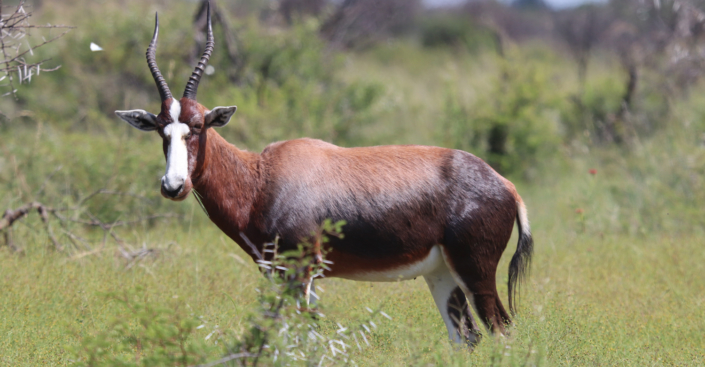
Blesbuck
The blesbok or blesbuck has a distinctive white face and forehead which inspired the name, because bles is the Afrikaans word for a blaze such as one might see on the forehead of a horse.
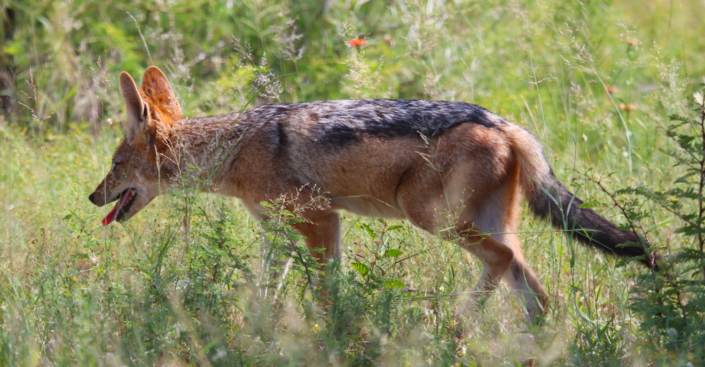
Black-Backed Jackal
The Black-Backed Jackal is a wonderfully resourceful scavenger and cleans up all the offal and remains of dead animals when not dining on scrub hares, mongoose, mice, rats, lizards and snakes.

The Wild Crew – Seeds – March 2026
The weekend of the 14th and 15th was very busy for the School Programme team, with a Wild Crew outing on the Eastern side and another one on the Western side on the Sunday. The theme was seeds - those tiny little things that seem so insignificant but feed the world!
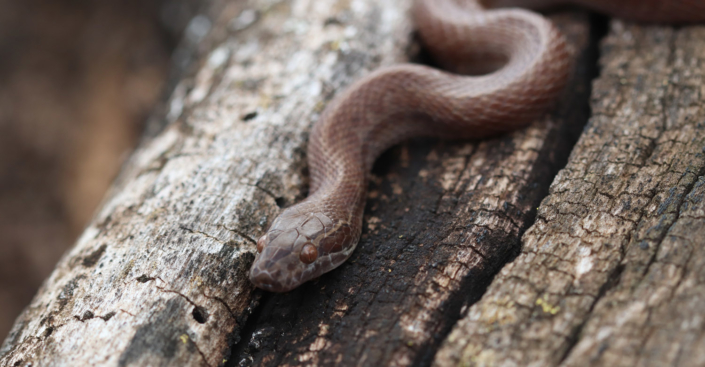
Brown House Snake
The Brown House Snake, is one of the most common and most useful snakes in South Africa. It is attracted to human dwellings where it feeds on rats, mice and lizards. They are not venomous and are completely harmless to humans. House snakes are powerful constrictors which rely on their muscle power to constrict prey.
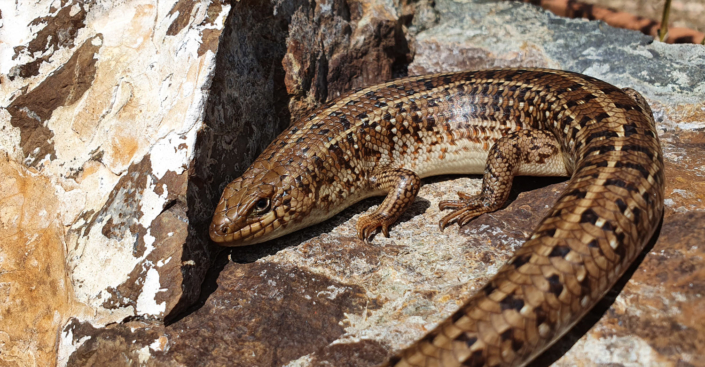
Cape Skink
The Cape skink is live-bearing and the female may take up to a week to birth her litter of offspring - often between 8 and 18 per brood. Each baby is born in a thin, membranous bag or 'shell' that it breaks out of within seconds. Newborns measure measure 5 to 7 cm.

Buffalo Thorn Tree
The Buffalo Thorn Tree is widely used for magical and medicinal purposes because of the spines or thorns, which are paired; One is hooked, and the other is straight. According to Nguni legend, the thorns of the Ziziphus tell us something about ourselves - that we must look ahead to the future (straight thorns) but we must never forget where we have come from (hooked thorns).
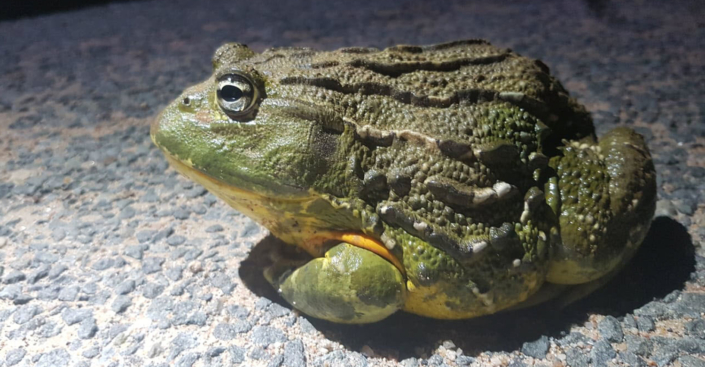
Giant Bullfrog
The Giant African Bullfrog is among the largest frogs, with males weighing up to 1.4 kg. It is an insatiable carnivore, eating insects, small rodents, reptiles, small birds, and other amphibians.

The Wild Crew – Bugs – Nov 2025
Before we’d even reached the veld, everyone had already caught their first bug, causing great excitement! Once in the long grass, each child had a turn using the sweep nets, and on our return to our ‘base’ at The Sheds, we identified the insects, observed them under a microscope, and then, of course, released them back into their habitat.

Black-Crowned Tchagra
This bird of the Crocodile River Reserve tends to favour the northern mountain bushveld. The black forehead and crown differentiate this Tchagra from other Tchagras. It is also a larger, bolder bird and is more conspicuous in its behaviour.

Lannea Edulis
Lannea edulis has shiny green leaves that are hairy when young and leathery when matured, with creamy white flowers from August to October. It bears bright red ovoid berries from October to December that become purplish black when they become ripe, which have a juicy and pleasantly sour flavour and are eaten by mice, birds and humans.
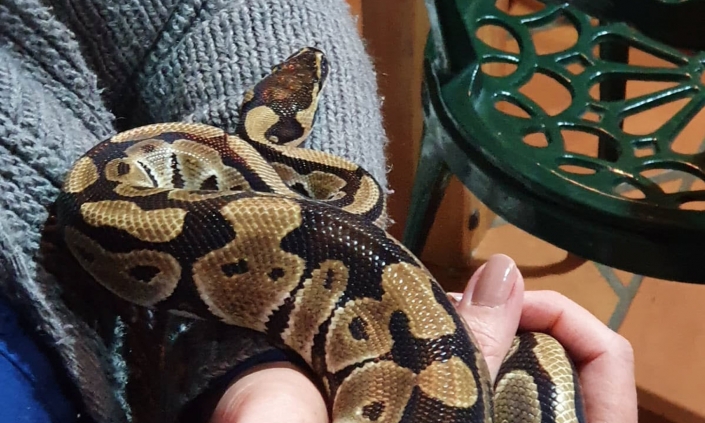
A Talk By the Jhb Wildlife Vet at the Reserve
Over 40 people attended the Urban Wildlife talk by the Johannesburg Wildlife Veterinary Hospital and Rehabilitation Facility. This event was held on Sunday the 18th April 2021. Everyone involved deemed it an absolute hit. It was wonderful to see the number of children in the audience who participated with great enthusiasm!

School Holiday Programme 2024 Photo Gallery
In total we had 52 attending the CRR 2024 School Holiday Programme over the four days in July 2024.
We hope that all the children who attended have happy memories of the time they spent with us in the CRR and have taken away with them a deeper understanding of the natural world, and the importance of caring for it.
We hope that all the children who attended have happy memories of the time they spent with us in the CRR and have taken away with them a deeper understanding of the natural world, and the importance of caring for it.

The Wild Crew – Wetlands & Water – February 2026
Testing the water and finding healthy results reinforced the importance of wetlands as natural filters in our water systems, and highlighted what can be achieved when a natural environment is properly cared for.
With so many hands-on activities, we did not even have time to examine our finds under the microscope, but there was no doubt that the children appreciated the vast biodiversity we discovered in such a small section of the wetlands. We made sure they understood the functions of wetlands and the important role they play in the lives of so many species, including our own.
With so many hands-on activities, we did not even have time to examine our finds under the microscope, but there was no doubt that the children appreciated the vast biodiversity we discovered in such a small section of the wetlands. We made sure they understood the functions of wetlands and the important role they play in the lives of so many species, including our own.

Living with Baboons & Monkeys in the Crocodile River Reserve
One of the great privileges of living in the Crocodile River Reserve is sharing your space with free-roaming wildlife. But when baboons and monkeys start helping themselves to your kitchen, what can you actually do about it?

The Wild Crew – Insects – August 2026
One of the great privileges of living in the Crocodile River Reserve is sharing your space with free-roaming wildlife. But when baboons and monkeys start helping themselves to your kitchen, what can you actually do about it?

Barn Owl
The Barn Owl has earned itself the nickname ‘ghost owl’ because of its pale plumage and chilling call. This creature is one of the most widely distributed bird species in the world, and the superstition surrounding it has been unwittingly passed down from generation to generation. These superstitions have led to the senseless and cruel killing of these birds over the decades, however, farmers and enlightened city-folk hold these splendid birds in high regard, because they protect crops by feeding on rats, mice and birds.

Crinum Bulbispernum
The Crinum lily is a large bulbous plant up to 1m high, which produces attractive grey green gracefully arching leaves during the summer months, and is often seen in the Crocodile River Reserve.
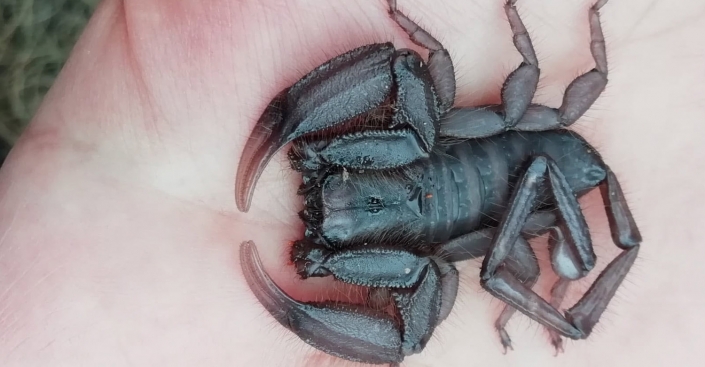
Our first post-lockdown scorpion walk
After months in lock-down, it was a joy to get back outdoors and into nature, as our creepy crawly expert, Jonathan Leeming, shared fascinating facts about why all arachnids should be treated with respect rather than fear.
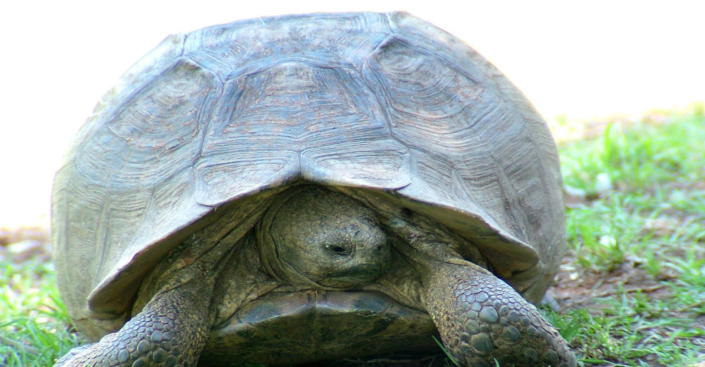
Handling Tortoises
Tortoises store water in a cloacal bursa or sack in the rear of the body for use when required. They will also excrete this water supply as a defence against predators [or humans!] and to dampen dry soil when digging holes in which to lay eggs. If you pick up a tortoise trying to survive in very dry conditions it may excrete its valuable water supply, resulting in the eventual death of the animal.

Birds of the Crocodile River Reserve Talk
Justin guided us through a carefully curated selection from the CRR's impressive bird list — and while covering all 255 recorded species in one morning was never going to be possible, he chose beautifully. The majestic Brown Snake Eagle, the charismatic Arrow-marked Babbler, the humble Dove, the mystical Grass Owl and the very special Orange River Francolin were among the stars of the show. The presentation was, however, occasionally — and hilariously — interrupted by a group of Hadeda Ibis who clearly felt they deserved a mention too.

The Wild Crew – Seeds – September 2025
Looking back on what the CRR School Programme has achieved so far in 2025, and seeing the little veld flowers popping up in the Egoli Granite Grasslands even before the first rains, I am reminded just how important our lessons on seeds have been. This topic may not seem quite as exciting as water, history, or geology, but without seeds—where would we be?
