

Our Content Collection
Innovation comes only from readily and seamlessly sharing information rather than hoarding it.
~ Tom Peters
We have gathered immense amounts of information during this journey, and have stored it here so that it can be shared with the aim of empowering those that need it.
Please feel free to browse our library by category of content below
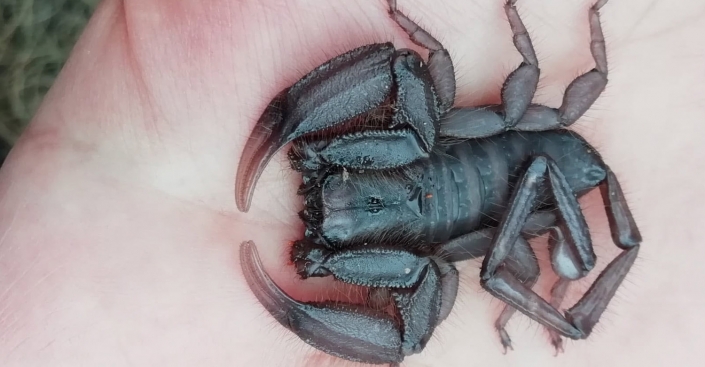
Our first post-lockdown scorpion walk
After months in lock-down, it was a joy to get back outdoors and into nature, as our creepy crawly expert, Jonathan Leeming, shared fascinating facts about why all arachnids should be treated with respect rather than fear.
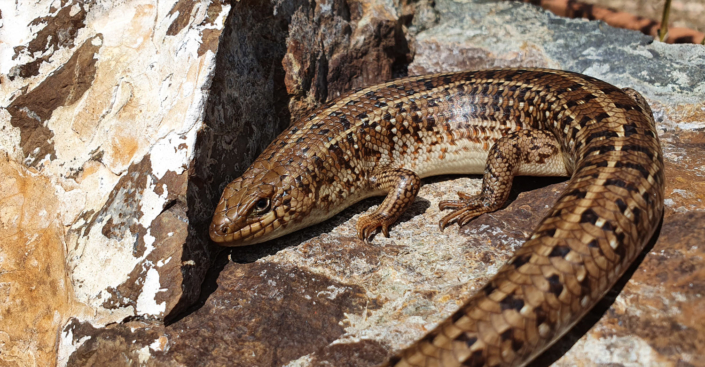
Cape Skink
The Cape skink is live-bearing and the female may take up to a week to birth her litter of offspring - often between 8 and 18 per brood. Each baby is born in a thin, membranous bag or 'shell' that it breaks out of within seconds. Newborns measure measure 5 to 7 cm.

The Wild Crew – Seeds – September 2025
Looking back on what the CRR School Programme has achieved so far in 2025, and seeing the little veld flowers popping up in the Egoli Granite Grasslands even before the first rains, I am reminded just how important our lessons on seeds have been. This topic may not seem quite as exciting as water, history, or geology, but without seeds—where would we be?

The Wild Crew – Rivers
Rivers are such a vital resource that inspiring the next generation to care for them — and teaching them how — is a no-brainer. So on Saturday, we headed off to a small stream in the CRR with our Wild Crew. And on this outing, they really lived up to their name.
True to nature, the children couldn’t wait to get their feet wet despite the cold. They were told to remove their shoes and socks, roll up their pants, and were handed water testing strips, petri dishes, and little bottles with pipettes.
True to nature, the children couldn’t wait to get their feet wet despite the cold. They were told to remove their shoes and socks, roll up their pants, and were handed water testing strips, petri dishes, and little bottles with pipettes.
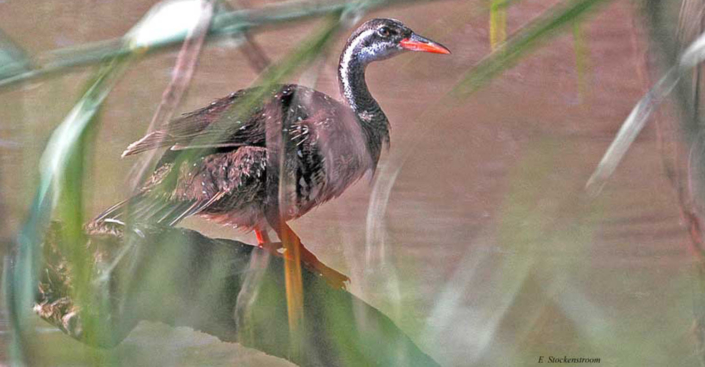
African Finfoot
The African Finfoot or Watertrapper, (Podica senegalensis) is a very rare and vulnerable bird species. The Afrikaans name for the African Finfoot is "Watertrapper".
The African Finfoot is about the size and shape of a large cormorant.
The African Finfoot is about the size and shape of a large cormorant.

The Wild Crew – Insects – August 2026
One of the great privileges of living in the Crocodile River Reserve is sharing your space with free-roaming wildlife. But when baboons and monkeys start helping themselves to your kitchen, what can you actually do about it?
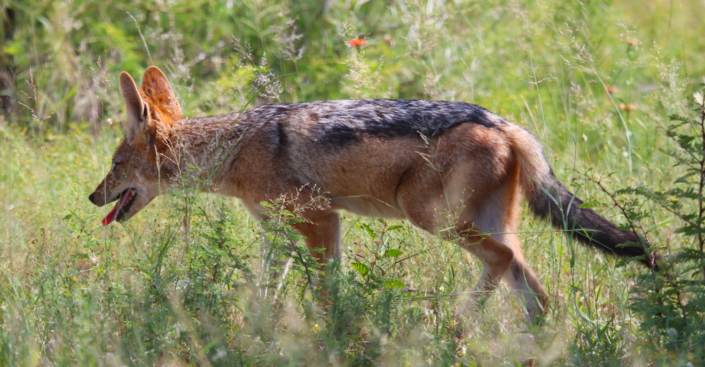
Black-Backed Jackal
The Black-Backed Jackal is a wonderfully resourceful scavenger and cleans up all the offal and remains of dead animals when not dining on scrub hares, mongoose, mice, rats, lizards and snakes.

Black-Crowned Tchagra
This bird of the Crocodile River Reserve tends to favour the northern mountain bushveld. The black forehead and crown differentiate this Tchagra from other Tchagras. It is also a larger, bolder bird and is more conspicuous in its behaviour.

The Wild Crew – Birds – Oct 2025
We started by exploring how birds are adapted to what they eat and where they live. From sharp beaks to clever claws, every feathered friend has its own design for survival. Our walk took us through five different habitats, each alive with birdsong and movement.

Barn Owl
The Barn Owl has earned itself the nickname ‘ghost owl’ because of its pale plumage and chilling call. This creature is one of the most widely distributed bird species in the world, and the superstition surrounding it has been unwittingly passed down from generation to generation. These superstitions have led to the senseless and cruel killing of these birds over the decades, however, farmers and enlightened city-folk hold these splendid birds in high regard, because they protect crops by feeding on rats, mice and birds.

Identification of Grasses
Some grasses have stems which grow along the surface of the ground, and result in new shoots. These horizontal stems are called STOLONS. If the horizontal stems are below the ground, they are called RHIZOMES.

The Wild Crew’s Wetlands Expedition: Here’s What Happened! – 8 March 2025
The Wild Crew met on the 8th of March, and what an exciting outing this was! A good walk, mud, water, tadpoles, and fun experiments—everything needed for a truly great event. As we reached the top of the hill on our walk, we paused to take in the wetlands below and learnt how the landscape influences where wetlands are found.
Upon reaching the wetlands, Suretha and Sulize discussed the different types of wetlands, after which we took soil samples using a tool called an auger.
Upon reaching the wetlands, Suretha and Sulize discussed the different types of wetlands, after which we took soil samples using a tool called an auger.
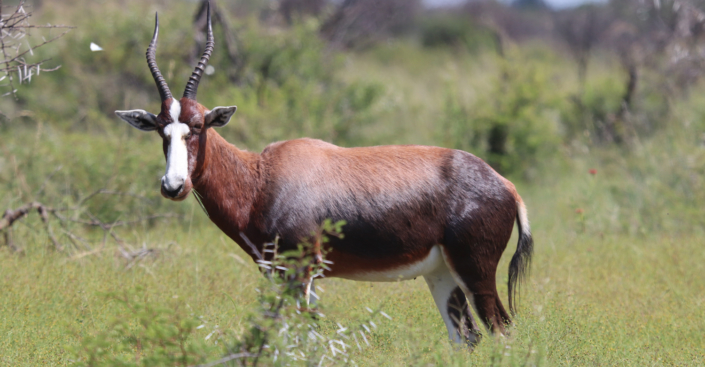
Blesbuck
The blesbok or blesbuck has a distinctive white face and forehead which inspired the name, because bles is the Afrikaans word for a blaze such as one might see on the forehead of a horse.

School Holiday Programme 2024 Photo Gallery
In total we had 52 attending the CRR 2024 School Holiday Programme over the four days in July 2024.
We hope that all the children who attended have happy memories of the time they spent with us in the CRR and have taken away with them a deeper understanding of the natural world, and the importance of caring for it.
We hope that all the children who attended have happy memories of the time they spent with us in the CRR and have taken away with them a deeper understanding of the natural world, and the importance of caring for it.
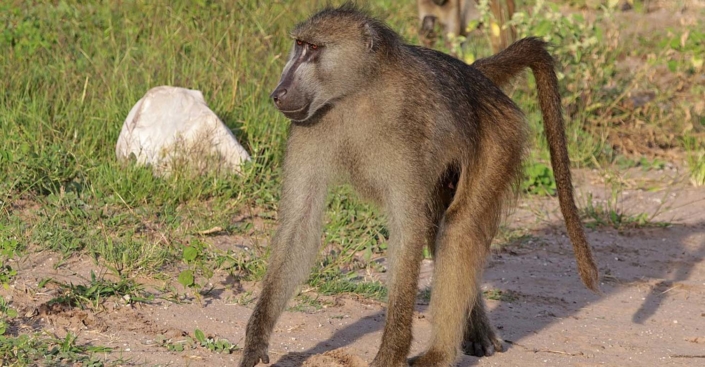
Chacma Baboon
Baboons are omnivorous with the bulk of their diet including fruit, seeds, insects, bulbs and any small poor helpless bird or mammal that they can catch.

Themeda Triandra Grass
One of the species regarded as the most valuable grass in sourveld is Themeda triandra. Also known as Red Grass, it grows abundantly when the veld is in good condition.

The Wild Crew – Rocks – August 2025
Clearly, rocks do rock, if the number of children and parents who turned up for this event was anything to go by. Everyone enjoyed the walk to Koppie Alleen, and the climb to the top was a real adventure! Understanding the vital role rocks have played in the forming of the planet, and their contribution to the environment in the past and now, gave everyone pause for thought.

Large Sourplum
The ripe fruits of the Ximenia Caffra or Sourplum are eaten by birds such as barbets, bulbuls and starlings and mammals such as giraffe, impala, kudu, grey duiker, steenbok, bushbuck and eland enjoy eating it's leaves. The larvae of a number of butterflies feed on the leaves, some examples being the Bush Scarlet butterfly, Natal and Silvery bar, Bowker's and Saffron sapphire and the Brown playboy.

Black-Collared Barbet
The Black-Collared Barbet or Lybius Torquatus is also known as the Rooikophoutkapper and is one of the most common barbets in Africa, occurring from the DRC to Kenya and southern Africa.

The Wild Crew – Seeds – March 2026
The weekend of the 14th and 15th was very busy for the School Programme team, with a Wild Crew outing on the Eastern side and another one on the Western side on the Sunday. The theme was seeds - those tiny little things that seem so insignificant but feed the world!

The Wild Crew – Seeds
Although the focus for this outing was seeds—particularly grasses—the rich biodiversity of the grasslands meant we discovered all sorts of interesting things along the way. We came across beautiful flowers, unusual plants, butterflies, grasshoppers, and other fascinating creepy crawlies that demanded our attention.
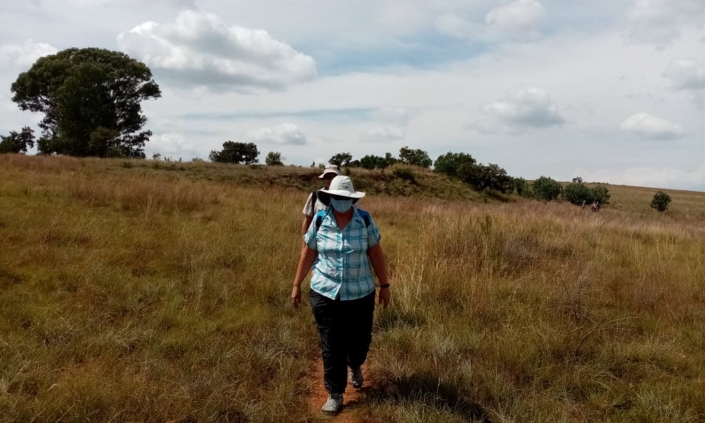
A Successful Tree Walk in March 2021
The Tree Walk held in the Crocodile River Reserve offered an insightful and easy to understand introduction to the day, starting with the structure of leaves and how to use this to identify a tree. What followed was a walk through the beautiful veld of the Reserve during which we identified a variety of trees - such as the fascinating underground tree Lannae Aedulis, the Diospyros Lycioides (Blue Bush), the common but beautiful Acacia Karroo (Sweet Thorn) and the Protea Caffra Trees but to name a few.

Crinum Bulbispernum
The Crinum lily is a large bulbous plant up to 1m high, which produces attractive grey green gracefully arching leaves during the summer months, and is often seen in the Crocodile River Reserve.
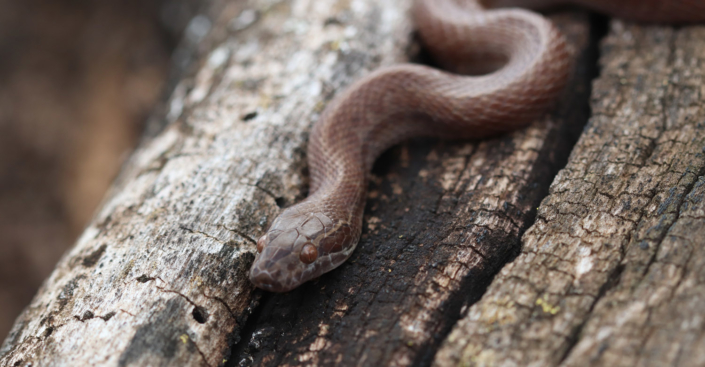
Brown House Snake
The Brown House Snake, is one of the most common and most useful snakes in South Africa. It is attracted to human dwellings where it feeds on rats, mice and lizards. They are not venomous and are completely harmless to humans. House snakes are powerful constrictors which rely on their muscle power to constrict prey.
